
Pharmaceutical Raw Materials
Veterinary API
Antiallergic Drugs
Hormones and Endocrine Drugs
Drug Metabolism
Pharmaceutical Intermediates
Synthetic Anti Infective Drugs
Specialty Drugs
Vitamins and Minerals Medicines
Feed Drug Additive
Antineoplastic Agents
Nervous System Drugs
Respiratory Drugs
Diagnostic Agents
Anti Stress Drugs
Antipyretic Analgesics
Antiparasitic Drugs
Circulatory System Drugs
Biochemicals
Blood System Drugs
Immune System Medication
Pharmaceutical Excipients
Fluid, Electrolyte, and Acid-Base Balance
Urinary System Drugs
Antibiotics
Anesthetic Agents
Inhibitors
Other Chemical Drugs
Digestive System Drugs
CAS:55-22-1
Molecular Formula:C6H5NO2
Alias
More Information
4-Pyridinecarboxylic Acid; Pyridine-4-Carboxylic Acid; 4-Pyridinecarboxylic Acid For Synthesis; Isonicotinic Aci; 66 Kda Neurofilament Protein; Anti-Ina (Alpha Internexin) (Center) Antibody Produced In Rabbit; Nef5; Neurofilament 5; Pyridine-4-Carboxylic Acid, 4-Carboxypyridine
Brief Introduction
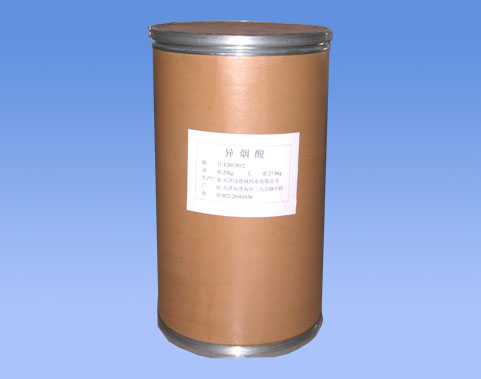
Used as a pharmaceutical intermediate, mainly used in the production of isoniazid for anti tuberculosis drugs, and for the synthesis of derivatives of amide, hydrazine and ester.
Suppliers
View More Vendors (3) >

Alias
More Information
Adenocard; Adenoscan; Adenine Riboside
Brief Introduction
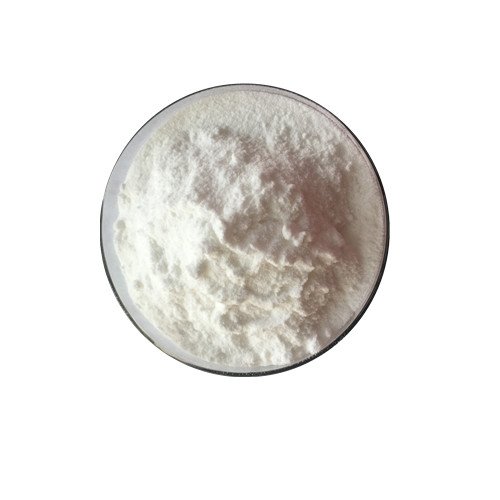
Adenosine is an active substance with nucleosides and purines as its basic structure, which is mediated by adenine β- A nucleoside formed by binding D-ribose with glycosidic bond. It is widely distributed in all types of cells. In nucleic acids, it can be either free or combined. Adenosine phosphates such as ATP are important energy carriers in biochemical reactions.
Suppliers
View More Vendors (3) >
Chuangxin Biotech
99
/
Food Grade
25kg
/
Fibre Drum
CAS:58108-05-7
Molecular Formula:C7H15ClN2
Alias
More Information
3-Azabicyclo[3.3.0]Oct-3-Yl-Amine Monohydrochloride; Gliclazide Intermediate 2; Hexahydrocyclopenta[C]Pyrrol-2(1H)-Amine Monohydrochloride; 3-Amino-3-Azabicyclo[3.3.0]Octanehydrochloride; N-Amino-3-Azabicyclo[3.3.0]Octane Monohydrochloride; N-Amino-3-Azabicyclo[3,3,0]-Octan Hcl; Octahydrocyclopenta[C]Pyrrol-2-Amine Hydrochloride; 3-Amino-3-Azabicyclooctane Hcl; 3-Amino-3-Azabicyclo(3.3.0)Octane Hydroc; N-Amino-3-Azabicycio[3.3.0] Octane Hcl
Brief Introduction
3-Amino-3-azabicyclo[3.3.0]octane hydrochloride is used as a synthetic reactant of gliclazide, a sulfonylurea hypoglycemic agent.
Suppliers
View More Vendors (3) >
![3-Amino-3-Azabicyclo[3.3.0]Octane Hydrochloride](https://res.chemball.com/upload2/482bbd5b-1983-4bfa-b4f5-00a2ec31deb2.jpg)
![3-Amino-3-Azabicyclo[3.3.0]Octane Hydrochloride](https://res.chemball.com/upload2/7e927977-e8f8-428b-9021-c40ed69720e3.jpg)
![3-Amino-3-Azabicyclo[3.3.0]Octane Hydrochloride](https://res.chemball.com/upload2/664e4d44-527f-4ab2-ad28-6dee43750988.png)
CAS:59-66-5
Molecular Formula:C4H6N4O3S2
Alias
More Information
2-Acetamido-5-Sulfamoyl-1,3,4-Thiadiazole; 2-Acetylamino-1,3,4-Thiadiazole-5-Sulfonamide; 5-Acetamido-1,3,4-Thiadiazole-2-Sulfonamide; N-[5-(Aminosulfonyl)-1,3,4-Thiadiazol-2-Yl]Acetamide
Brief Introduction
This product is pharmaceutical raw materials and pharmaceutical intermediates.
Suppliers
View More Vendors (3) >



CAS:59-88-1
Molecular Formula:C6H9ClN2
Alias
More Information
Hydrazine, Phenyl-, Monohydrochloride; Phenylhydrazine Hcl; Phenylhydrazinium Chloride; Phneylhydrazine Hydrochloride; Hydrazinobenzene Hydrochloride; Hydrazine,Phenyl-,Monohydrochloride; Phenylhydrazinium Chloride R. G.; Phenylhydrazine Hydrochloridegr
Brief Introduction
Phenylhydrazine hydrochloride is a kind of solid powder with pink odor and irritant smell at room temperature. It is also a highly toxic substance. It is mainly used in organic intermediates of dye, medicine and pesticide industry. For example, it can produce chromophenol as-g, antipyrine, cationic dye, developer, etc.
Suppliers
View More Vendors (3) >

Inquiry (
10
/ 10
)
Clear All
Sign In
Error!