
Pharmaceutical Raw Materials
Veterinary API
Antiallergic Drugs
Hormones and Endocrine Drugs
Drug Metabolism
Pharmaceutical Intermediates
Synthetic Anti Infective Drugs
Specialty Drugs
Vitamins and Minerals Medicines
Feed Drug Additive
Antineoplastic Agents
Nervous System Drugs
Respiratory Drugs
Diagnostic Agents
Anti Stress Drugs
Antipyretic Analgesics
Antiparasitic Drugs
Circulatory System Drugs
Biochemicals
Blood System Drugs
Immune System Medication
Pharmaceutical Excipients
Fluid, Electrolyte, and Acid-Base Balance
Urinary System Drugs
Antibiotics
Anesthetic Agents
Inhibitors
Other Chemical Drugs
Digestive System Drugs
CAS:117-39-5
Molecular Formula:C15H10O7
Alias
More Information
2-(3,4-Dihydroxyphenyl)-3,5,7-Trihydroxy-4H-Chromen-4-One; Meletin; Quercitin; 3,3',4',5,7-Pentahydroxyflavone; Kvercetin
Brief Introduction
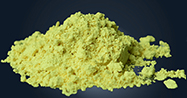
Quercetin is a flavonoid found in many foods and herbs and is a regular component of a normal diet. Extracts of quercetin have been used to treat or prevent diverse conditions including cardiovascular disease, hypercholesterolemia, rheumatic diseases, infections and cancer but have not been shown to be effective in clinical trials for any medical condition.
Quercetin is a natural flavonoid, which widely exists in Sophora japonica. It mainly comes from enzymatic hydrolysis of rutin and is yellow needle like crystal. It is widely used in many fields such as food, medicine, health products and so on.
Suppliers
View More Vendors (2) >
CAS:122341-56-4
Molecular Formula:C18H23O7P
Alias
More Information
Amppd; 3-(4'-Methoxyspiro[Adamantane-2,3'-[1,2]Dioxetan]-4'-Yl)Phenyl Dihydrogen Phosphate; 3-(2'-Spiroadamantane)-4-Methoxy-4-(3''-Phosphoryloxy)Phenyl-1,2-Dioxetane; [3-(3'-Methoxyspiro[Adamantane-2,4'-Dioxetane]-3'-Yl)Phenyl] Dihydrogen Phosphate; 3-(4-Methoxyspiro(1,2-Dioxetane-3,2'-Tricyclo(3.3.1.1(3,7))Decan)-4-Yl)Phenyl Phosphate; 4-Methoxy-4-(3-Phosphatephenyl)Spiro(1,2-Dioxetane)-3,2'-Adamantane; 3-(2'-Spiroadamantan; (3-[2-Spiroadamatane]-4-Methoxy-4-[3-Phosphoryloxy]-Phenyl-1,2-Dioxetane) Dioxetane; Phenol,3-(4-Methoxyspiro[1,2-Dioxetane-3,2'-Tricyclo[3.3.1.13,7]Decan]-4-Yl)-,1-(Dihydrogen Phosphate)
Brief Introduction
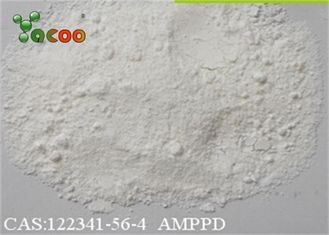
3 - (2-helix adamantane) - 4-methoxy-4 - (3-phosphoxyyl) - phenyl-1,2-dioxane, abbreviated as amppd, is a chemiluminescent reagent. Amppd and luminol, as we are familiar with, are oxidation reduction luminescent reagents. However, amppd is an ultra-high sensitivity detection reagent for phosphatase, which is different from luminol, which is mainly used in blood detection.
Suppliers
View More Vendors (2) >
CAS:153-94-6
Molecular Formula:C11H12N2O2
Alias
More Information
D(+)-Tryptophan; (2R)-2-Amino-3-(1H-Indol-3-Yl)Propanoic Acid; D-α-Amino-3-Indolepropionic Acid; (R)-2-Amino-3-(3-Indolyl)Propionic Acid; (R)-(+)-2-Amino-3-(3-Indolyl)Propionic Acid; D-Trp; D-Tryptophane; D-2-Amino-3-(3-Indolyl)Propionic Acid; D-2-Amino-3-Indolepropionic Acid; D-2-Amino-3-Indolylpropanoic Acid; D-Alpha-Amino-3-Indolepropionic Acid
Brief Introduction
As a non protein active amino acid, D-TRYPTOPHAN has special physiological properties. It can be used as non nutritive sweetener, feed additive and plant growth agent in food and feed industry and agriculture. In the pharmaceutical industry, it is mainly used to synthesize various peptides to replace L-tryptophan, prolong the half-life of peptide drugs and reduce side effects, It is an important synthetic precursor of enzyme inhibitors. It can improve the immune ability of the body and delay the occurrence of allergic reaction. Most polypeptide antibiotics can inhibit or kill Gram-positive bacteria, while others can inhibit or kill Gram-negative bacteria such as Pseudomonas aeruginosa, mycobacteria, fungi, bacteria, bacteria and tumor cells. The side chain of semi synthetic antibiotics synthesized from D-TRYPTOPHAN plays an important role in its pharmacological function, and the peptide bond is difficult to be identified β- In addition, it has a wide antibacterial spectrum, low toxicity, low anaphylaxis, fast absorption, high blood concentration, long duration of drug strength and so on.
Suppliers
View More Vendors (2) >

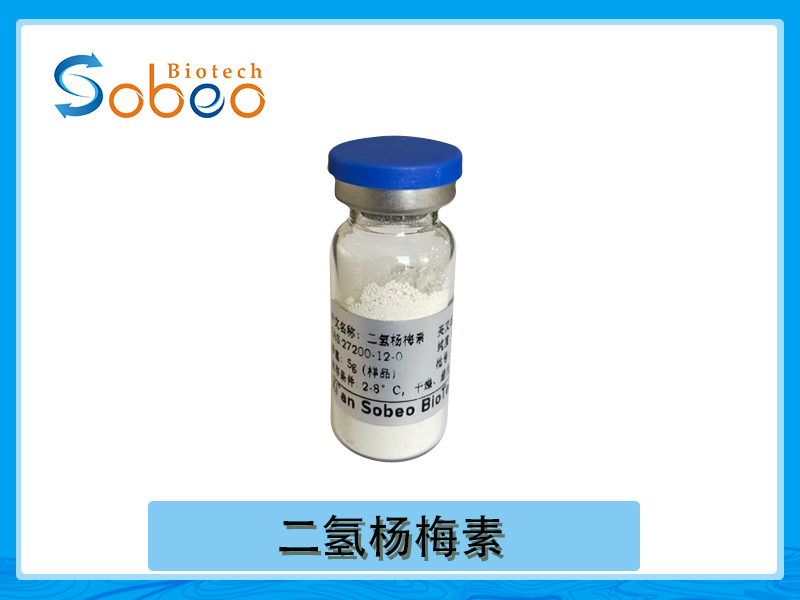
CAS:27200-12-0
Molecular Formula:C15H12O8
Alias
More Information
Ampelopsin E; (2R,3R)-3,5,7-Trihydroxy-2-(3,4,5-Trihydroxyphenyl)-2,3-Dihydrochromen-4-One; 3,5,7,3',4',5'-Hexahydroxy-2,3-Dihydroflavone; (2R,3R)-Dihydromyricetin; (2R,3R)-3,5,7-Trihydroxy-2-(3,4,5-Trihydroxyphenyl)-2,3-Dihydrochromen-4-One Ampelopsin Dhm; Flavanone,3,3',4',5,5',7-Hexahydroxy; 3,5,7,3',4',5'-Hexahydroxy-2,3-Dihydroflavonol; Ampelopsin; Ampeloptin; 3,3',4',5,5',7-Hexahydroxy-2,3-Dihydroflavanonol; Rac-Ampelopsin; 2,3-Dihydro-3,5,7-Trihydroxy-2-(3,4,5-Trihydroxyphenyl)-4H-1-Benzopyran-4-On; 3,3’,4’,5,5’,7-Hexahydroxy-2,3-Dihydroflavanonol; 3,3’,4’,5,5’,7-Hexahydroxy-Flavanon; Dihydromyricetin, From Myrica Rubra; Two Hydrogenmyricetin; (2R,3R)-3,5,7-Trihydroxy-2-(3,4,5-Trihydroxyphenyl)Chroman-4-One
Brief Introduction
Ampelopsin, also known as dihydromyricetin, is a flavanonol, a type of flavonoid. It is found in the Ampelopsis species japonica, megalophylla, and grossedentata; Cercidiphyllum japonicum; Hovenia dulcis; Rhododendron cinnabarinum; some Pinus species; and some Cedrus species, as well as in Salix sachalinensis.
Hovenia dulcis has been used in traditional Japanese, Chinese, and Korean medicines to treat fever, parasitic infection, as a laxative, and a treatment of liver diseases, and as a hangover treatment. Methods have been developed to extract ampelopsin from it at large scales, and laboratory research has been conducted with the compound to see if it might be useful as a drug in any of the conditions for which the parent plant has been traditionally used.
In a trial of sixty patients with fatty liver disease dihydromyricetin improved glucose and lipid metabolism and exerted anti-inflammatory effects which were beneficial.
Suppliers
View More Vendors (2) >
Alias
More Information
P1010; Dw75; (R)-2-Amino-3-Hydroxypropanoic Acid; D-Serin; H-D-Ser-Oh; (R)-2-Amino-3-Hydroxypropionic Acid; D-2-Amino-3-Hydroxypropionic Acid
Brief Introduction
Serine is a non essential amino acid, rich in eggs, fish, soybeans, human body can also synthesize serine from glycine. Serine is widely used in medicine. Serine promotes the metabolism of fat and fatty acids and helps maintain the immune system.
Suppliers
View More Vendors (2) >
Inquiry (
10
/ 10
)
Clear All
Sign In
Error!