
CAS:26172-55-4
Molecular Formula:C4H4ClNOS
Alias
More Information
5-Chloro-2-Methyl-4-Isothiazolin-3-One; 5-Chloro-2-Methyl-Isothiazolin-3-One; 5-Chloro-2-Methyl-3(2H)-Isothiazolone; 5-Chloro-2-Methylisothiazol-3-One; Parmetol DF 35; 5-Chloro-2-Methyl-1,2-Thiazol-3-one; Chloromethylisothiazolinone; Methylchloroisothiazolinone; 5-Chloro-2-Methyl-3-Isothiazolone; CMIT; Methylchloroisothiazoline
Brief Introduction
It is used to treat industrial circulating water and has the function of killing bacteria and algae. It is a kind of general antiseptic, which can effectively kill algae, bacteria and fungi. The active monomer can be widely used in industrial cooling water, oil field return tank water, paper industry, pipeline, coating, paint, rubber, cosmetics, photographic film, washing products and other industries.
Suppliers
View More Vendors (2) >
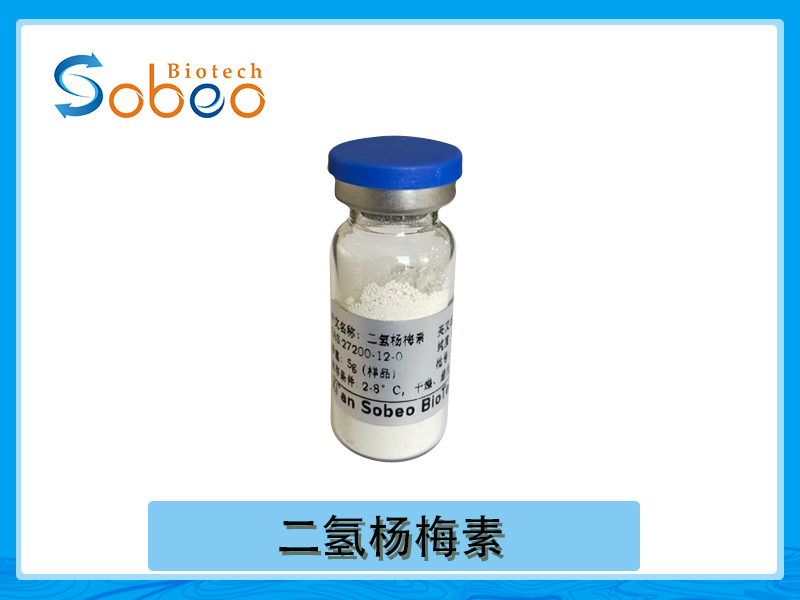
CAS:27200-12-0
Molecular Formula:C15H12O8
Alias
More Information
Ampelopsin E; (2R,3R)-3,5,7-Trihydroxy-2-(3,4,5-Trihydroxyphenyl)-2,3-Dihydrochromen-4-One; 3,5,7,3',4',5'-Hexahydroxy-2,3-Dihydroflavone; (2R,3R)-Dihydromyricetin; (2R,3R)-3,5,7-Trihydroxy-2-(3,4,5-Trihydroxyphenyl)-2,3-Dihydrochromen-4-One Ampelopsin Dhm; Flavanone,3,3',4',5,5',7-Hexahydroxy; 3,5,7,3',4',5'-Hexahydroxy-2,3-Dihydroflavonol; Ampelopsin; Ampeloptin; 3,3',4',5,5',7-Hexahydroxy-2,3-Dihydroflavanonol; Rac-Ampelopsin; 2,3-Dihydro-3,5,7-Trihydroxy-2-(3,4,5-Trihydroxyphenyl)-4H-1-Benzopyran-4-On; 3,3’,4’,5,5’,7-Hexahydroxy-2,3-Dihydroflavanonol; 3,3’,4’,5,5’,7-Hexahydroxy-Flavanon; Dihydromyricetin, From Myrica Rubra; Two Hydrogenmyricetin; (2R,3R)-3,5,7-Trihydroxy-2-(3,4,5-Trihydroxyphenyl)Chroman-4-One
Brief Introduction
Ampelopsin, also known as dihydromyricetin, is a flavanonol, a type of flavonoid. It is found in the Ampelopsis species japonica, megalophylla, and grossedentata; Cercidiphyllum japonicum; Hovenia dulcis; Rhododendron cinnabarinum; some Pinus species; and some Cedrus species, as well as in Salix sachalinensis.
Hovenia dulcis has been used in traditional Japanese, Chinese, and Korean medicines to treat fever, parasitic infection, as a laxative, and a treatment of liver diseases, and as a hangover treatment. Methods have been developed to extract ampelopsin from it at large scales, and laboratory research has been conducted with the compound to see if it might be useful as a drug in any of the conditions for which the parent plant has been traditionally used.
In a trial of sixty patients with fatty liver disease dihydromyricetin improved glucose and lipid metabolism and exerted anti-inflammatory effects which were beneficial.
Suppliers
View More Vendors (2) >
CAS:27503-81-7
Molecular Formula:C13H10N2O3S
Alias
More Information
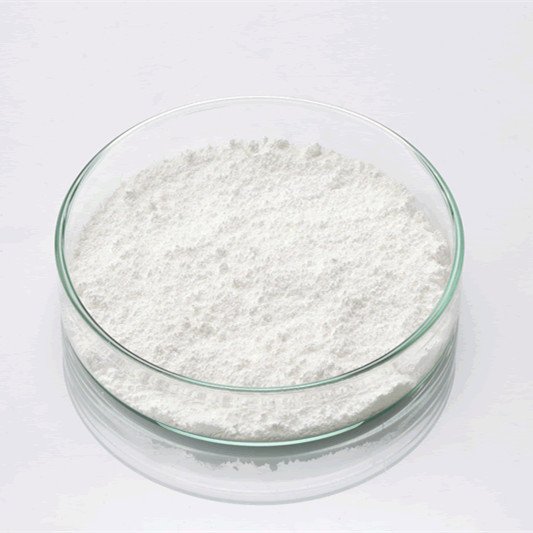
2-Phenyl-1H-Benzo[D]Imidazole-5-Sulfonic Acid; Uv Absorber-T; 2-Phenyl-5-Benzimidazolesulfonic Acid; 2 Phenyl-5-Benzimidazolesulfonic Acid; 2-Phenylbenzimidazole-5-Sulfonate Salt; 2-Phenyl-Benzimidazole-5-Sulfonic Acid
Brief Introduction
It can be used as ultraviolet absorber, mainly in cosmetics.
Suppliers
View More Vendors (2) >
CAS:3401-74-9
Molecular Formula:C26H56ClN
Alias
More Information
N-Dodecyl-N,N-Dimethyldodecan-1-Aminium Chloride; Didodecyldimethylammonium Chloride; D1221; Dimethyl-Didodecyl-Ammonium Chloride; Didodecyl Dimethyl Ammonium Chloride
Brief Introduction
At a lower concentration (30mg / L), the bactericidal rate of sulfate reducing bacteria (SRB) and saprophytic bacteria (TGB) is 100%, and its bactericidal effect is slightly better than 1227 (dodecyl dimethyl benzyl ammonium chloride). It can also be used as fabric softener, emulsifier, disinfectant, bactericide, antistatic agent, etc.
Suppliers
View More Vendors (2) >
CAS:3792-50-5
Molecular Formula:C4H6NNaO4
Alias
More Information
(S)-2-Aminosuccinic Acid, Sodium Salt; Sodium L-Aspartate; Sodium Aspartate; Sodium (2S)-2-Amino-3-Carboxypropanoate; Aspartatemonosodiumsalt; L-Sodium Aspartic; L-Aspartic Acid 4-Sodium Salt; Sodium D-Aspartic Acid; L-Aspartic Acid Hydrogen 4-Sodium Salt
Brief Introduction
Sodium L-aspartate has excellent freshness and antiseptic effects. It is widely used as freshener and preservative in food industry and can replace monosodium glutamate. In the pharmaceutical industry, it can be used as the main raw material for heart disease drugs, liver function enhancers, ammonia antidotes, fatigue eliminators and amino acid infusion. It is also widely used in industry.
Suppliers
View More Vendors (2) >
Inquiry (
10
/ 10
)
Clear All
Sign In
Error!