
Which is better base KOH or NaOH? Comparative Analysis of NaOH vs. KOH
In the realm of chemistry, Sodium Hydroxide (NaOH) and Potassium Hydroxide (KOH) stand as two pivotal alkaline compounds with irreplaceable roles in numerous domains. This article undertakes an in-depth analysis of their properties, applications, differences, and compares their respective advantages and disadvantages. The aim is to provide you with a comprehensive perspective for making informed choices when selecting the appropriate compound.
Comprehensive Comparison of Properties between Sodium Hydroxide and Potassium Hydroxide:
Physical properties:
● Crystal structure:
The crystal structure of sodium hydroxide is cubic, while the crystal structure of potassium hydroxide is rhombic. The different crystal structures affect their physical properties and chemical reactions.
● Solubility:
Potassium hydroxide has a higher solubility in water, while sodium hydroxide has a slightly lower solubility. The dissolution process of potassium hydroxide releases a large amount of heat, causing the solution to heat up.
● Hygroscopicity:
Both potassium hydroxide and sodium hydroxide have certain hygroscopicity, but potassium hydroxide has stronger hygroscopicity.
● Other properties:
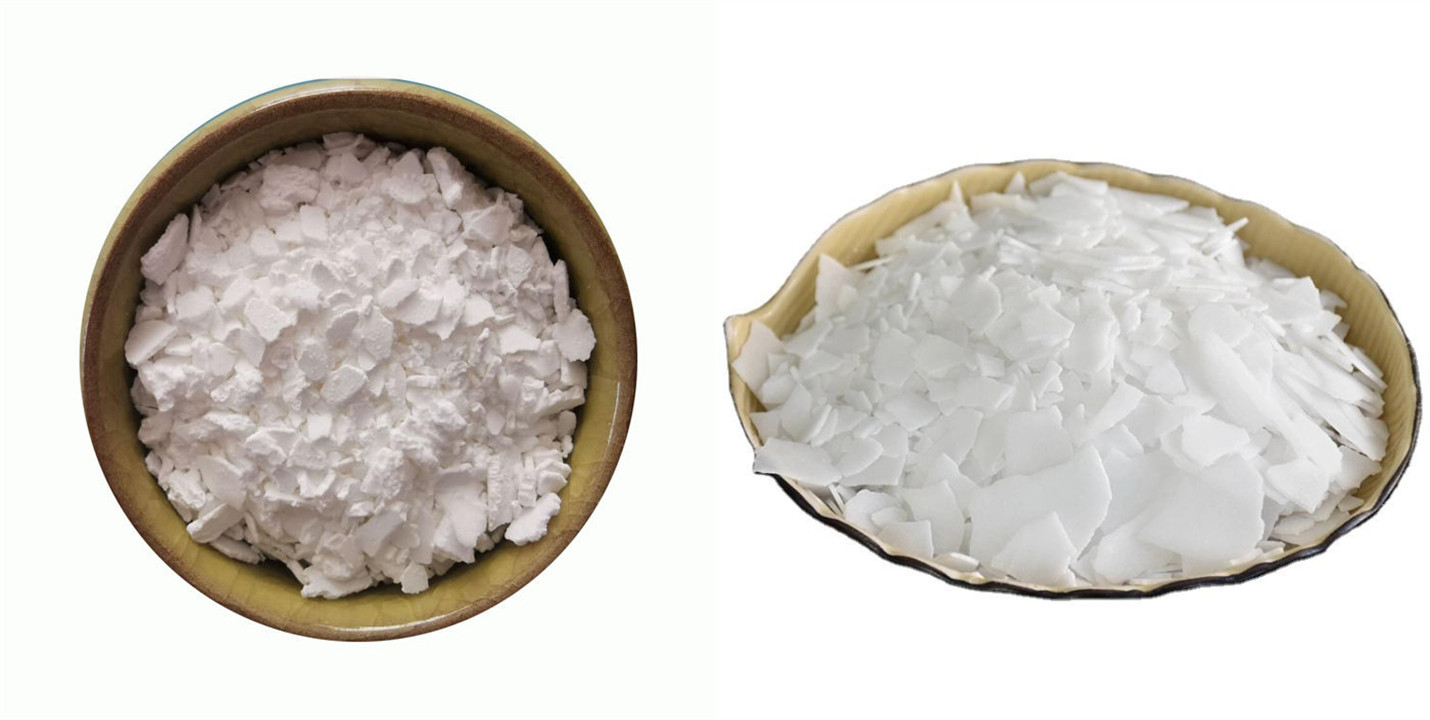
Sodium hydroxide is generally in the form of white translucent flakes or particles, with a relative density of 2.13 (20 ℃), a melting point of 318.4 ℃, and a boiling point of 1390 ℃. Potassium Hydroxide is generally in the form of white flakes or powders, with a relative density of 2.044 (20 ℃), a melting point of 360.4 ℃, and a boiling point range of 1320-1324 ℃.
Chemical properties:
● Chemical reaction:
Sodium hydroxide is easily converted into sodium carbonate in the air, and hydrogen gas is produced when it reacts with aluminum. Potassium hydroxide will absorb water from the air and gradually transform into potassium carbonate, which has properties similar to caustic soda.
● Strong Alkalinity:
Potassium hydroxide and sodium hydroxide are both strong alkalis, but potassium hydroxide has a slightly higher alkalinity. They rapidly dissociate into hydroxide ions (OH ^ -) and corresponding metal ions (K+or Na+) in water.
Common Attributes and Cautions:
Both compounds share the attribute of strong corrosiveness. To prevent deliquescence and corrosion, they should not come into contact with metal containers and should be stored in sealed conditions after use.
Differences in Applications and Comparative Advantages:
Interchangeability and Specific Needs:
In certain scenarios, Sodium Hydroxide and Potassium Hydroxide can be interchangeably employed. Nevertheless, specific applications demand the use of one over the other. For example, the selection between a hydrogen generator and medical-grade lime hinges on distinct application prerequisites. Sodium Hydroxide and Potassium Hydroxide exhibit distinct behaviors in saponification reactions, yielding hard and soft soaps respectively.
Variations in Application Fields:
● Sodium Hydroxide finds extensive use in paper production, soap manufacturing, dye synthesis, artificial silk creation, petroleum refining, and more.
● Potassium Hydroxide functions primarily as an analytical reagent, saponification agent, desiccant, plating agent, and in dyeing and synthetic fiber production.
Fundamental Nature of Application Distinctions:
The difference in the application of sodium hydroxide and potassium hydroxide essentially stems from their different properties. Choosing suitable alkaline compounds can better meet the needs of practical applications.
Price Comparison:
In the market, sodium hydroxide is usually cheaper than Potassium Hydroxide, which to some extent reflects their production costs and supply-demand relationship.
From the detailed comparison of properties to differences in application, the difference between sodium hydroxide and potassium hydroxide is evident. In practical applications, selecting appropriate compounds based on different needs will ensure effective and safe application.

Send Email